Portal Glastonbury
Ref.PD0798
Ref.PD0798
Couldn't load pickup availability
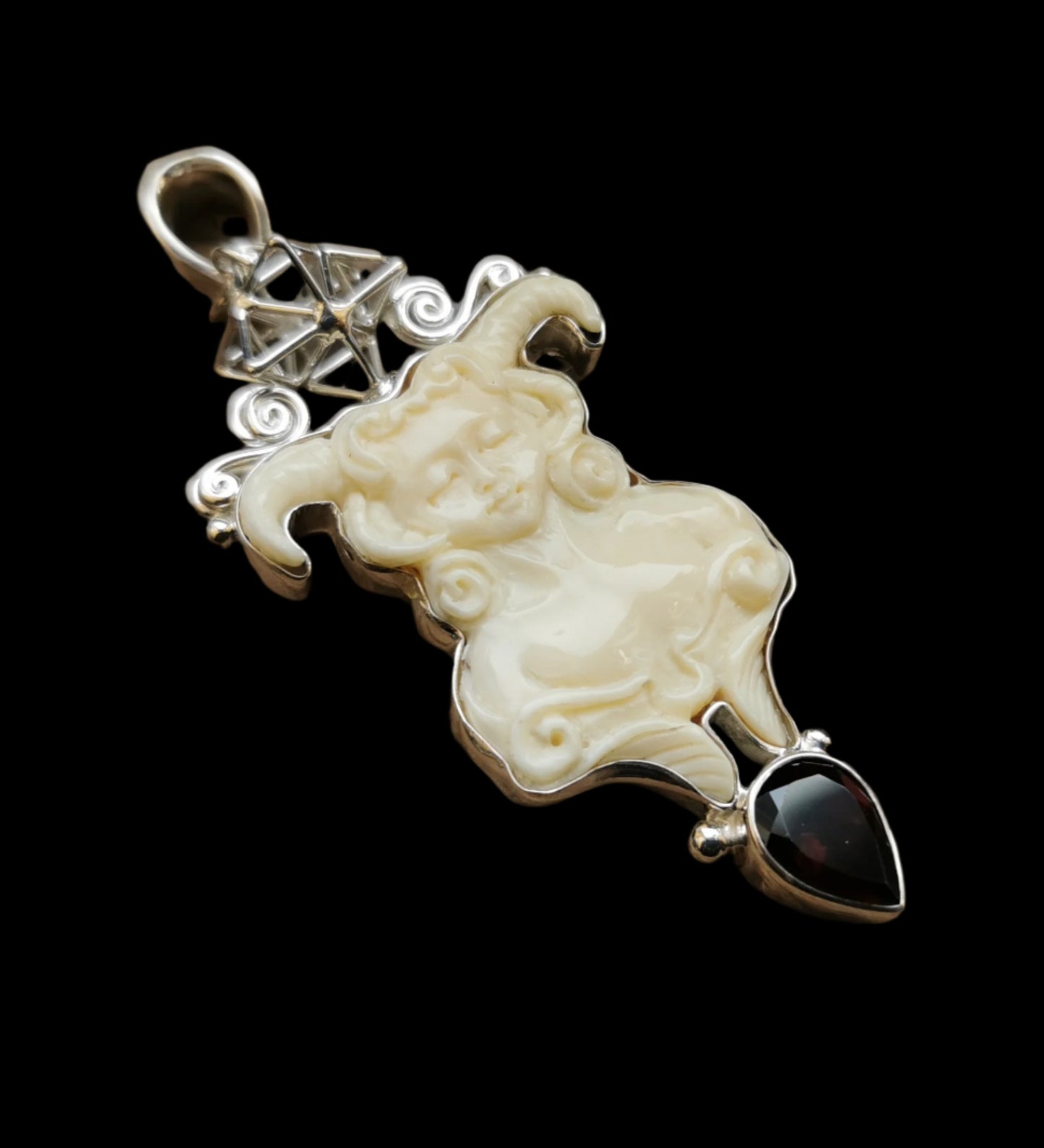
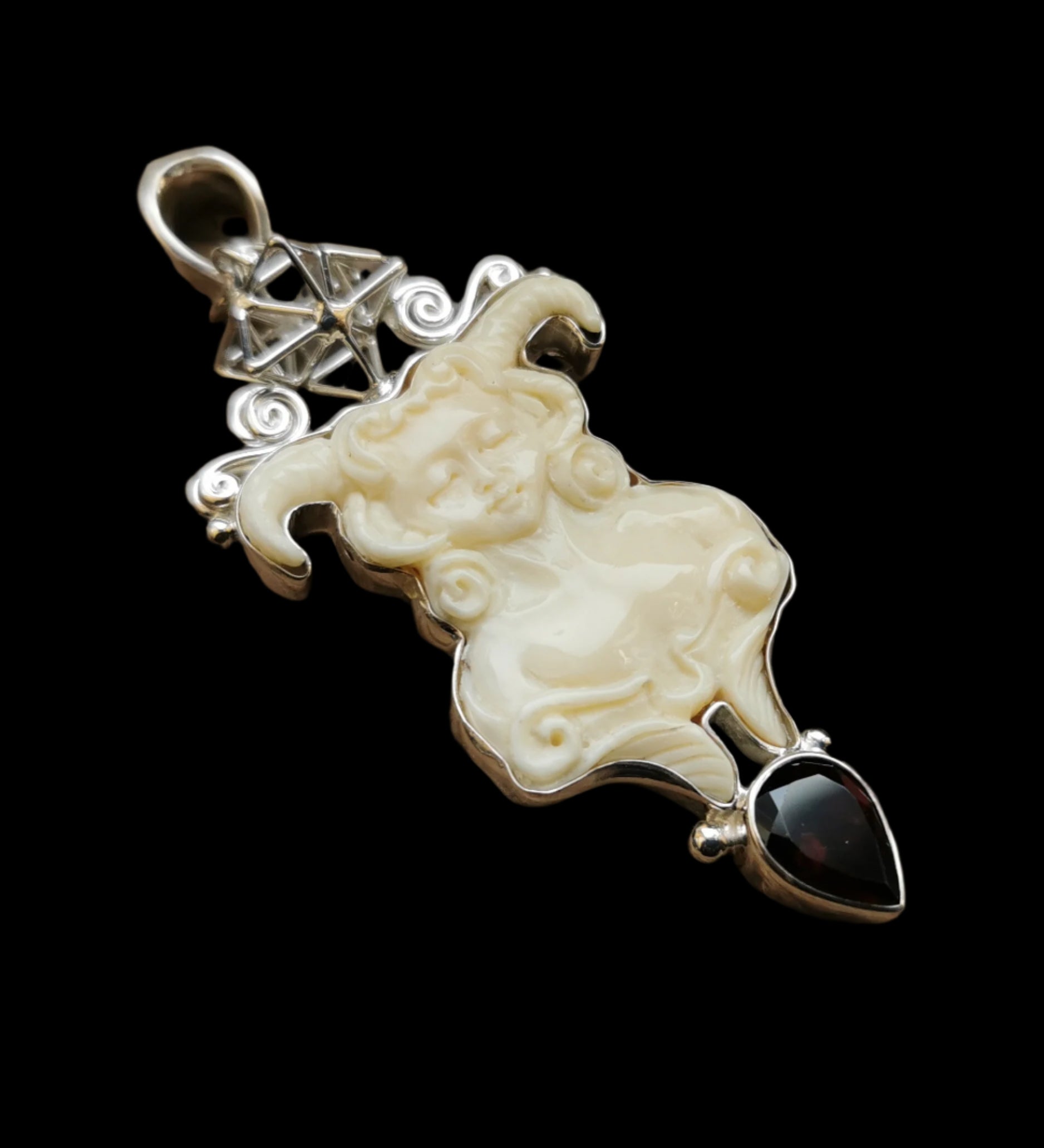
Ref.PD0798 - Silver pendant with Tantric Star geometry, mastodon ivory carved fairy, and amethyst gemstone.
Fairies, as mythical beings rooted in folklore across cultures—especially Celtic, Germanic, and broader European traditions—carry layered symbolic significance. These ethereal figures, often depicted as small, magical, and tied to nature, embody meanings that shift with context, reflecting human hopes, fears, and connections to the unseen.
Symbolic Significance
Nature’s Spirit: Fairies symbolize the vitality and mystery of the natural world. Linked to forests, rivers, and wild places, they personify the life force within ecosystems—guardians of flora and fauna. They remind us of nature’s beauty and power, often acting as stewards or avengers when humans overstep (e.g., stealing from a fairy ring).
Imagination and Wonder: As creatures of fantasy, fairies represent the boundless realm of human imagination. They evoke childlike curiosity and the magic of possibility, bridging the mundane and the extraordinary. Their capriciousness—granting wishes or playing tricks—mirrors creativity’s unpredictable spark.
Ambiguity of Morality: Fairies often blur good and evil. In tales, they might bless or curse, heal or hex, reflecting life’s dualities. This ambiguity symbolizes the complexity of existence—neither wholly benevolent nor malevolent, they challenge black-and-white thinking and embody the grayness of choice.
Transition and Liminality: Tied to thresholds—dusk, dawn, or fairy mounds—fairies symbolize change and the in-between. They mark life’s passages (birth, death) or shifts in awareness, acting as guides or harbingers across boundaries between worlds, suggesting a fluidity in reality.
Hidden Truths: Fairies hint at forces beyond human grasp. Their invisibility (unless they choose otherwise) and otherworldly realms (e.g., Faerie) symbolize the unseen—intuition, subconscious, or truths veiled by everyday life. They invite us to look deeper, past the surface.
Broader Contexts
Cultural Roots: In Celtic lore, fairies (sidhe) are ancestral spirits or fallen beings, tied to the land’s memory. Germanic tales cast them as mischievous or protective, while Victorian romanticism softened them into delicate sprites.
Psychological Lens: Jung saw fairies as archetypes of the collective unconscious—projections of inner wildness or repressed nature. They’re mirrors to our psyche’s untamed edges.
Modern Echoes: Today, fairies in media (e.g., Tinkerbell) symbolize nostalgia or eco-awareness, adapting old meanings to new hopes.
Fairies’ trickster side—stealing babies (changelings) or time (a day in Faerie equaling years)—symbolizes nature’s indifference, a reminder that its gifts come with untamed rules.
In essence, fairies symbolize nature’s spirit, imaginative freedom, moral complexity, liminal shifts, and hidden depths—ethereal threads weaving human experience with the wild unknown.
Tantric Star
Activation: Initiation, Inspiration
The Tantric Star is formed by interlocking ascending and descending tetrahedrons (see below). Also known as the Mer Ka Ba, the Tantric Star functions as a 3-dimensional mandala, connecting us to our centre point, a stargate into the matrix of manifest reality. It describes the energy pattern created by the electromagnetic male and female potencies of creation as they come together to conceive atoms, Humans, the Universe - the seminal form that Consciousness takes as it initiates the polarisation of the Monad into the sacred enclosure of the Trinity, holding the frequency of the 3rd dimension fully manifest in form.
This form protects against unbalanced magnetic emanations, e.g., mobile and cordless phones.
Size: 72mm/2.83in approx.