Portal Glastonbury
Ref.DV0052
Ref.DV0052
Couldn't load pickup availability
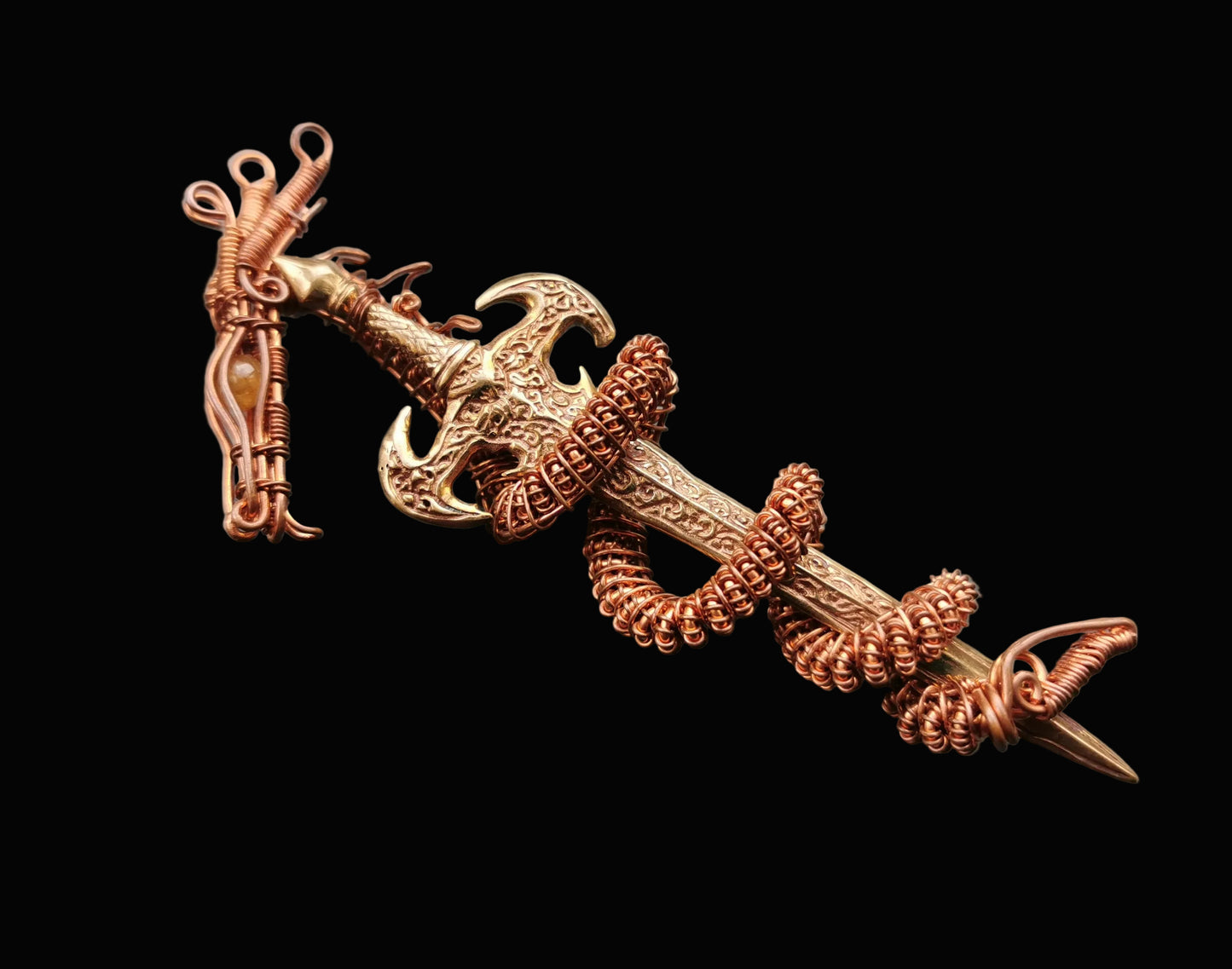
Ref.DV0052 - Brass sword with entwined copper wire wrapped dragon.
Dragon symbolism in spiritual practices, particularly when intertwined with the concept of "Dragon Medicine," encompasses an array of meanings that go beyond mythology into the realm of spiritual guidance, healing, and personal transformation:
• Transformation and Personal Growth: Dragons are potent symbols of change and personal evolution. Dragon Medicine here emphasizes the shedding of old skins—old habits, beliefs, or emotional burdens—to make way for new growth, akin to the dragon's ability to transform and renew itself.
• Wisdom and Ancient Knowledge: Dragons have long been associated with wisdom. In spiritual contexts, Dragon Medicine might involve tapping into this ancient wisdom for guidance, understanding life's deeper mysteries, or accessing esoteric knowledge for personal enlightenment.
• Guardianship and Protection: Dragons are traditional guardians, and this aspect of Dragon Medicine invokes their protective energy. They are believed to shield individuals from negative influences, guard sacred spaces, and protect spiritual seekers on their journey.
• Elemental Balance and Mastery: Linked to the elements, dragons symbolize mastery over natural forces. Dragon Medicine might include practices to balance one's internal elements or chakras, harnessing the dragon's attributes for energetic equilibrium and elemental magic.
• Kundalini Awakening: The dragon often represents the serpent-like energy of Kundalini. In Dragon Medicine, this could refer to practices aimed at awakening this energy, leading to spiritual enlightenment, increased vitality, and profound personal transformation.
• Yin and Yang Harmony: Dragons, in their balance with phoenixes or other yin symbols, teach about the harmony of dualities. This aspect of Dragon Medicine might involve rituals or meditations to achieve balance in life's polarities, promoting inner harmony.
• Creativity and Manifestation: The dragon's breath, particularly fire, symbolizes creative force. Dragon Medicine could involve techniques for igniting one's creative spark, manifesting desires, or burning away obstacles to creativity.
• Spiritual Guidance and Dragon Allies: Dragons are often called upon as spirit guides or allies in spiritual work. Dragon Medicine might include methods to connect with one's dragon ally for guidance, insight, or protection on one's spiritual path.
• Shadow Work: Dragons embody the fierce and sometimes dark aspects of nature. Dragon Medicine might encourage the exploration of one's shadow self, using dragon energy to face and integrate these parts for wholeness.
• Immortality and Eternal Wisdom: Reflecting dragons' mythical longevity, this facet of Dragon Medicine could focus on teachings about the soul's immortality, reincarnation, or accessing the Akashic records for eternal wisdom.
• Alchemical Transformation: In alchemy, dragons sometimes represent the chaos or the primal matter that needs transformation. Dragon Medicine might then involve practices of spiritual alchemy, transforming base aspects of self into gold, symbolizing enlightenment or the highest potential of the soul.
• Healing Energies: Dragon Medicine can be invoked for healing, where dragons are seen as powerful healers. This might include energy healing sessions where dragon energy is called upon to clear blockages, rejuvenate, or align the body's energy centers.
• Cultural Synthesis: The universal appeal of dragons allows for a blending of various cultural spiritual practices under the umbrella of Dragon Medicine, creating a tapestry of diverse yet interconnected teachings.
• Ritual and Meditation: Practices within Dragon Medicine might include specific rituals, meditations, or visualizations involving dragons to harness their symbolic power for personal or collective spiritual work.
Integrating dragon symbolism with spiritual practices like Dragon Medicine creates a rich, multifaceted approach to spirituality, where dragons are not just mythical creatures but are living symbols of the transformative, protective, and wise energies one can work with on their spiritual journey.
Swords hold profound symbolic significance across cultures, mythologies, and religions, often representing power, justice, honor, and duality—such as life and death or good versus evil. Their sharp blade and hilt evoke themes of cutting through illusions, protection, and transformation, making them potent emblems in folklore, art, and philosophy. Expanded interpretations draw from their historical role as weapons and tools, symbolizing human ambition, moral integrity, and the balance between creation and destruction.
### Power, Authority, and Leadership
Swords frequently symbolize authority and leadership, as they were historically wielded by rulers, warriors, and knights to enforce order or defend realms. In Western cultures, they represent sovereign power, often depicted in ceremonies like knighting, where the sword taps shoulders to confer status. Philosophically, this evokes the responsibility of power—sharp enough to protect but dangerous if misused—encouraging ethical leadership and self-discipline. In Viking traditions, swords were status symbols of wealth and prowess, buried with owners to signify eternal guardianship. Psychologically, owning or visualizing a sword can inspire confidence and assertiveness, helping individuals claim personal authority in life's battles.
### Justice, Honor, and Moral Integrity
As instruments of judgment, swords symbolize justice and honor, cutting through falsehoods to reveal truth. In many myths, they enforce moral codes, such as the samurai's katana embodying the bushido code of loyalty and discipline in Japanese culture. This duality—capable of both protection and harm—mirrors ethical dilemmas, promoting integrity and courage in decision-making. In Celtic lore, the Gaélica sword represented a warrior's identity and valor, tied to oaths of honor. Philosophically, it inspires standing firm in principles, fostering resilience against corruption or adversity.
### Duality of Life, Death, and Transformation
Swords encapsulate life's dual nature: creators of order through defense, yet bringers of death in conflict. In Eastern iconography, they appear in representations of deities, symbolizing the severing of ignorance for enlightenment, as in Hinduism or Buddhism where swords cut emotional ties or illusions. This transformative aspect encourages personal growth, where "forging" through trials builds character, akin to a blade tempered in fire. Psychologically, dreaming of swords may signal the need to confront fears or sever toxic ties, promoting renewal and empowerment.
### Wisdom, Knowledge, and Spiritual Insight
Beyond physical might, swords symbolize intellectual sharpness and wisdom, "cutting" to the core of knowledge. In Chinese culture, the jian sword represents the scholar-warrior ideal, blending intellect with action for prosperity and harmony. Ornaments on swords often signify luck, longevity, and wealth, tying to philosophical pursuits of balanced living. This fosters a mindset of enlightened action, where wisdom guides power, inspiring lifelong learning and insightful problem-solving.
Overall, swords invite contemplation of balanced power, ethical resilience, and transformative duality, serving as timeless metaphors for human strength and moral navigation in a complex world.
Size: 120mm/4.72in approx.