Portal Glastonbury
Ref.CR0162
Ref.CR0162
Couldn't load pickup availability
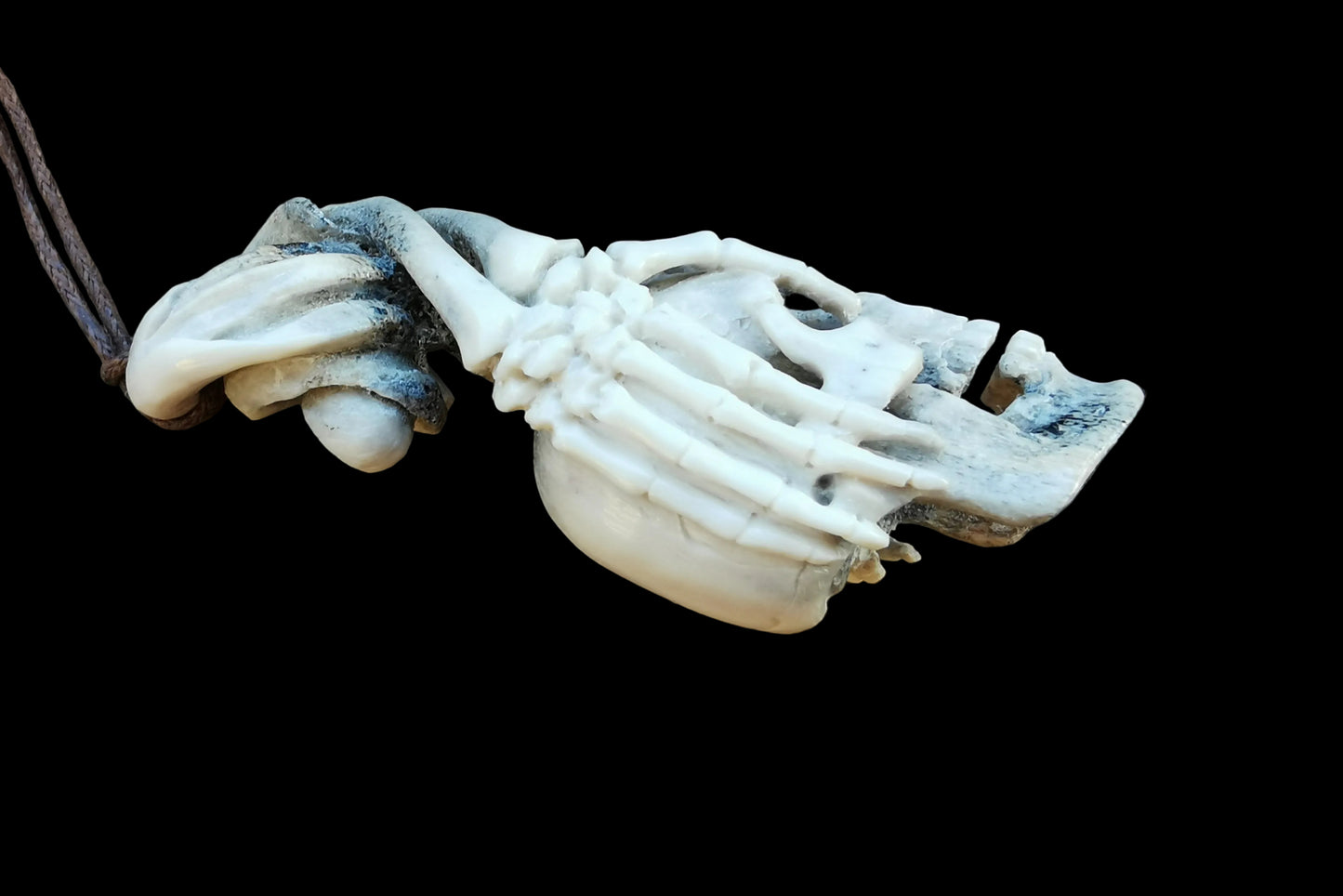
Ref.CR0162 - Ecologically sourced deer horn carved human skull with skeletal hands.
The human skull is one of the most potent and universal symbols in human culture, often evoking deep contemplation. In secular contexts—art, philosophy, science, and modern society—it primarily represents mortality, impermanence, and the transience of life, serving as a stark reminder of the human condition.
1. Mortality and the Inevitability of Death
The skull is the most recognizable remnant of the human body after decay, symbolizing the universal fate that, apparently, awaits all people. It strips away individuality (flesh, expression, identity) to reveal what remains: equality in death. Philosophers and artists use it to confront the fragility of existence, encouraging reflection on how brief life is and prompting a focus on meaningful living in the present.
2. Vanity and the Futility of Earthly Pursuits (Vanitas Theme)
In Renaissance and Baroque art (e.g., Dutch vanitas still lifes), the skull appears alongside objects like flowers, books, or luxuries to highlight the vanity of worldly achievements. It reminds viewers that wealth, power, beauty, and knowledge are temporary—everything fades. This secular philosophical tradition, influenced by classical stoicism, urges detachment from material obsessions and appreciation of life's fleeting nature.
3. Transformation and Change
The skull can signify personal or societal transformation, marking the end of one phase and the potential for renewal. In modern psychology and existential philosophy, it represents confronting fears of endings to foster growth, resilience, and authenticity—embracing change rather than denying it.
4. Danger, Warning, and Rebellion
Historically and today:
- Hazard symbol: Since the 19th century, the skull (often with crossbones) warns of poison or lethal danger, a practical secular use in science and industry.
- Piracy and defiance: The Jolly Roger flag symbolized ruthlessness, independence, and rebellion against authority—secular themes of freedom and risk.
- In subcultures (punk, biker, goth), it embodies non-conformity, strength, and fearless living.
5. Equality and the Human Condition
Beneath skin and status, all humans share the same skeletal structure. The skull symbolizes democratic equality—death as the great leveler, erasing social distinctions. In art and philosophy, it prompts reflection on shared humanity and ethical living.
In summary, the human skull is a profound memento of life's brevity, urging mindfulness, courage, and perspective. It fascinates because it is both repulsive (decay) and appealing (neoteny in its features), mirroring humanity's complex relationship with existence. Contemporary uses in fashion, tattoos, and art often blend these ideas into themes of empowerment and carpe diem.
Size: 66mm/2.6in approx.